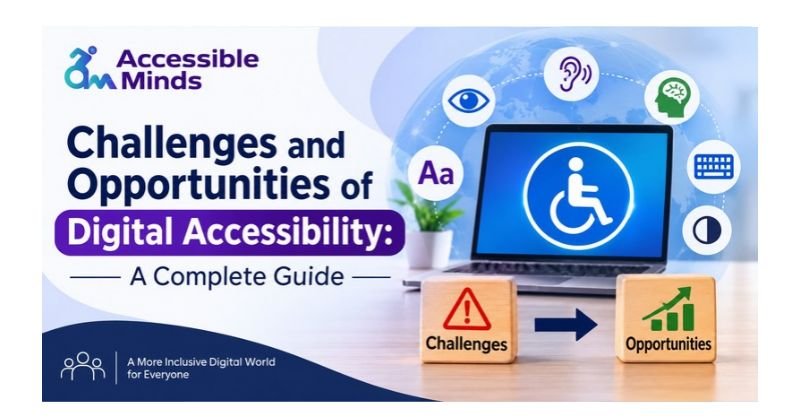
The digital world has become an essential part of everyday life. People use websites, mobile applications, and online services to access information, communicate, shop, learn, and complete important tasks. However, not everyone experiences the digital world in the same way. People with disabilities often face barriers when using digital platforms that are not designed with accessibility in mind. This is why understanding the challenges and opportunities of digital accessibility has become increasingly important for modern businesses.
Digital accessibility ensures that everyone, including people with visual, hearing, physical, and cognitive disabilities, can access and use digital content effectively. Although organizations face several challenges when implementing accessibility, it also creates valuable opportunities to improve user experiences, reach wider audiences, and build inclusive digital environments.
In this article, we will discuss the major challenges and opportunities of digital accessibility, its importance for businesses, and practical ways organizations can overcome accessibility barriers to create more inclusive digital experiences.
What Is Digital Accessibility and Why Does It Matter?
Digital Accessibility in a nutshell is about building digital products – your website or app for instance – in a way that they just plain work for anyone, regardless of their abilities. Its all about making sure your product plays nice with assistive tech- like screen readers, zooming tools, and speech recognition software – all the different tools that people use to interact with the web.
Understanding Digital Accessibility
Accessible websites provide equal access to all individuals. A good example of this accessibility is that alternative text for images helps people with visual disabilities, captions for videos allow people with hearing disabilities to comprehend video content, and keyboard navigation facilitates accessibility for users with motor impairments.
Importance of Digital Accessibility in Today’s Digital World
Accessibility of digital services creates favorable conditions for people with disabilities and ensures their independent engagement in cyber activities. In addition, it improves online services for businesses, which results in stronger customer satisfaction and facilitates their work with a wider range of users.
Major Challenges of Digital Accessibility
Despite growing awareness, organizations still encounter several digital accessibility challenges when creating and maintaining accessible websites and applications.
1. Lack of Awareness and Accessibility Knowledge
The primary struggle is the lack of understanding on how digital accessibility needs to be implemented. Many organizations and entrepreneurs are not fully aware of how people with disabilities use digital tools. Due to this, they probably miss out on many functions such as correct use of accessible links, image descriptions, keyboard-friendly options, and easily understood form titles. Companies can solve this issue by introducing training on the topic for designers, developers, copywriters, and marketers.
2. Technical Limitations and Website Compatibility
Technical barriers can make websites difficult or impossible for people with disabilities to use.
Some common problems include:
- Not having multiple text descriptions for important images.
- Poor color contrasts in text and background.
- People with disabilities are unable to use the forms and buttons.
- Headings are improperly structured.
- It is not possible to interact through the keyboard.
- Web pages are incompatible with screen readers.
- Absence of captions or transcripts for videos.
These issues can prevent users from accessing essential information and completing important online tasks.
3. Budget and Implementation Challenges
Making digital content accessible can involve additional costs, extra technical skills, and time. Organisations with low budgets might see accessibility improvements as just another cost and not a necessary step in their web design process. Old websites may also be hard to update because their structure does not follow today’s accessibility guidelines. Still, designing for accessibility from the start may allow companies to save money in the long run and not perform major redesigns later on.
4. Keeping Up with Accessibility Standards
As the technology develops and user’s expectations change, the digital accessibility standards also change. It is important for organizations to know about the relevant these guidelines and audit their websites often. The Web Content Accessibility Guidelines (WCAG) are accepted recommendations for making web accessibility better. However, the requirements can’t be understood and implemented without having enough expertise.
Key Opportunities of Digital Accessibility
Although digital accessibility presents challenges, it also offers significant opportunities for businesses, developers, and society.
1. Reaching a Wider Audience
Accessible website development plays a key role in connecting organizations with individuals who may face difficulties while accessing their services. Removing the obstacles to accessibility allows companies to offer their products and services to as many potential customers as possible, including those suffering from permanent, temporary, or situational disabilities.
2. Improving User Experience and Customer Satisfaction
Improvements in accessibility help increase usability for all types of users, not only those with disabilities. For example, improved site navigation, easy-to-read content, button labeling, video captions, and mobile-friendliness assist all users in accessing the site. A good website that implements accessibility standards will help its users find information fast, do actions easily, and have a better online experience.
3. Strengthening Brand Reputation and Business Growth
The importance of accessibility is made evident by companies that promote it as a sign of their commitment to the ideals of equality and social responsibility. More and more patrons prefer companies providing comfortable and inclusive experience. By providing conveniently-accessible digital platforms, the organization improves its image, boosts customers’ credibility, and benefits from possible long-term growth.
4. Encouraging Innovation in Digital Technology
Digital accessibility allows designers and developers to express their creativity in how humans interact with technology. Tools like: voice control, screen reading, automated captioning, voice-recognition abilities, and accessible mobile interfaces improve the experience for users. Innovations like these allow for better products and new technologies for a wider audience.
How Businesses Can Overcome Digital Accessibility Challenges
Organizations can take practical steps to identify accessibility barriers and create more inclusive digital experiences.
1. Follow WCAG Accessibility Guidelines
Businesses should understand and apply the Web Content Accessibility Guidelines (WCAG). WCAG 2.2 provides accessibility recommendations based on four fundamental principles:
- Perceivable: Information must be presented in ways users can perceive.
- Operable: Website components and navigation must be usable.
- Understandable: Information and interface functionality must be easy to understand.
- Robust: Content must work reliably with assistive technologies.
Following these principles helps organizations build more accessible websites and applications.
2. Conduct Regular Accessibility Testing
Access testing enables you to understand the obstacles that prevent disabled users from accessing your digital content. Organizations should use automation for access testing but augment it with human evaluations. Testing has to include testing for keyboard access, compatibility with screen readers, contrast, access to forms, and working of different interactive elements. It is also advisable to involve people living with disabilities in usability testing to receive more information about real accessibility issues.
3. Build Accessibility into the Development Process
Accessibility is something that needs to be taken into account when planning and designing the website rather than added afterward. Companies should ensure their employees are trained in accessibility, use proper design techniques, apply semantic HTML, and conduct accessibility testing while developing and updating content. It is advisable for organizations to cooperate with experts in the field of accessibility since they help identify any problems with accessibility and offer effective solutions to them.
The Future of Digital Accessibility
Technological advances, increase in the level of awareness, and the rising importance of inclusive digital experience will determine the future of digital accessibility as well. Artificial intelligence, voice recognition systems, automated captioning, and new assistive technologies are creating great opportunities in overcoming digital barriers. More and more companies are focusing on accessibility testing and inclusive design while creating websites and apps.
As digital services evolve continuously, organizations focusing on accessibility will be able to create efficient and inclusive experiences for audiences of all types.
Conclusion
It is important to be aware of what the hurdles and prospects of digital accessibility are since these factors can influence the process of achieving an inclusive digital future. Despite the difficulties in the form of technical, financial, and knowledge limitations that organizations may have, the value of digitally accessible experiences is large.
Organizations can deal with digital obstacles by following WCAG recommendations, testing accessibility from the point of view of accessibility, and utilizing the principles of inclusive design.
Accessible Minds is an organization assisting companies in determining accessibility challenges and working towards enhanced digital inclusiveness by offering an all-inclusive range of solutions and services.
Frequently Asked Questions (FAQs)
The biggest challenges include a lack of accessibility awareness, technical limitations, insufficient budgets, inaccessible website designs, and difficulties implementing and maintaining accessibility standards.
Digital accessibility creates opportunities to reach wider audiences, improve user experience, strengthen brand reputation, promote digital inclusion, and encourage innovation in technology.
Digital accessibility helps businesses provide inclusive services, improve customer satisfaction, reach more potential customers, and demonstrate their commitment to equal digital access.
Businesses can overcome these challenges by following WCAG guidelines, conducting regular accessibility audits, providing employee training, performing manual testing, and including accessibility in the development process.
The four principles are Perceivable, Operable, Understandable, and Robust (POUR). These principles form the foundation of the Web Content Accessibility Guidelines.
Accessibility testing identifies barriers in websites and applications, checks compatibility with assistive technologies, improves usability, and helps organizations make their digital platforms more inclusive.