Technology should create opportunities for everyone, regardless of their abilities, backgrounds, or circumstances. However, inaccessible websites, complicated applications, and poorly designed digital experiences can prevent people with disabilities from accessing essential information and services. Businesses must therefore make inclusive technology a priority when developing digital products.
Creating inclusive digital experiences requires more than adding accessibility features. It involves understanding different user needs, following accessibility standards, and ensuring that technology works with assistive tools. With the right approach and support from digital accessibility experts like Accessible Minds, organizations can reduce digital barriers and build technology that welcomes everyone.
Why Is Inclusive Technology Important?
Inclusive technology implies all the digital services, products, or applications developed with consideration of people from different backgrounds, abilities, and needs. It ensures that people can interact with the technology without unnecessary obstacles.
For businesses, it is crucial to use accessibility technology because if digital platforms are inaccessible, there can be potential customers who may not be able to access services.
People suffering from vision, hearing, physical, or mental impairments have difficulties while using websites or applications that have not been designed in an accessible manner.
Thus, prioritizing accessibility in digital space allows businesses to enhance user-friendliness and attract large audiences.
What Are the 3 Best Ways To Make Technologies More Inclusive?
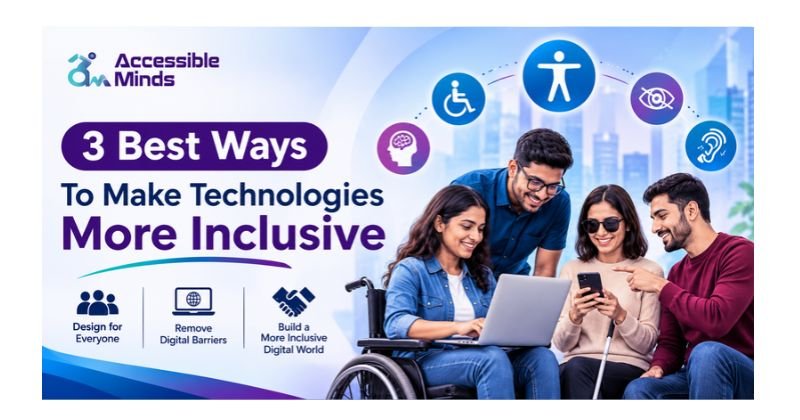
Companies can increase technological inclusivity by concentrating on three critical factors: accessible design, user experience, and equitable access to technology. By using these strategies, businesses can find technological hurdles and come up with digital solutions that can be used by a broader user base.
1. Prioritize Accessible and Inclusive Design
In order to attain inclusive technology, accessibility should be a key consideration in all stages of technology design and development. Accessible technology ensures that persons with disabilities can access digital products (websites, mobile applications, documents) independently.
Businesses should adopt basic accessibility standards like the Web Content Accessibility Guidelines (WCAG), so they can comprehend the commonly faced accessibility barriers.
Follow WCAG Accessibility Guidelines
The WCAG regulations tell us how to make sure that any online content can be perceived, used, understood, and operated. Digital creators should ensure that all things to do with keyboards, colors, meaningful image descriptions, forms, and content structurization.
As part of this process, there are accessibility audits carried out that recognize what prevents people from using relevant digital platforms. Accessible Minds assists organizations with accessibility testing and remediation services.
Integrate Assistive Technology
Assistive technologies have enabled individuals with disabilities to use digital devices effectively. Screen-readers address the needs of visually impaired users, while voice recognition programs give users other means to interact with their devices. Other tools aimed at achieving better accessibility are captions, screen magnification programs, and alternative input devices. It is crucial for business organizations to examine how their websites work together with the specified assistive technologies to evaluate real users’ experiences with their services.
Make Digital Interfaces Easy to Navigate
Easy navigation, text that is easy to read, labels that are clear and understandable, and layout that is not changing much make digital products user friendly. Accessibility-oriented design evaluation allows to detect interface elements that might be difficult for the user.
2. Focus on Inclusive User Experience and User-Centered Design
Technology ought to be developed with its users in mind. That is because user-centric UX design pays attention to different skills, tastes, and experiences rather than treating all users equally.
Companies should get varied opinions of users when researching, designing, and developing their products, so that they can identify real accessibility problems and find effective user-oriented solutions.
Understand Different User Needs
Some users may need a screen reader and some may need keyboard navigation captioning larger text or simplified instructions. User research can help organizations discover these needs early, before they turn into major usability issues.
Designing for… People with visual auditory physical and cognitive disabilities.
Involve Diverse Users in Accessibility Testing
Human testing results obtained from user testing of persons with different abilities may uncover accessibility issues that are not detected by automated testing tools. User testing insights include information on navigation forms, text, and interactive elements. Accessible Minds highlights expertise in accessibility and practical insights from real users, including people with disabilities, to help your organization develop better, more accessible digital products.
Create Flexible Digital Experiences
Flexible user interfaces give users the ability to tailor their experience when using a website or application. Making sure people can change text sizes, and providing captions and language choices, or alternative ways of navigating a page can make a big difference. Ongoing user experience testing can ensure these enhancements remain throughout updates.
3. Improve Equal Access to Technology and Digital Resources
Inclusive technology isn’t only about accessible products and digital services. Users also need affordable devices, strong internet access, accessible documents and the digital skills needed to access online products and services. Businesses should account for these things when creating inclusive digital products and services.
Make Digital Products Accessible Across Platforms
Ensure websites, apps, and other digital content work everywhere devices and assistive technologies may be used to access digital content. Factoring in slower internet connections and older devices enables everyone to experience your content. Accessibility development and document remediation services can help your organisation eliminate barriers to your digital content. Accessible Minds gives website, app, and document accessibility as well as remediation services.
Support Digital Literacy and Accessibility Awareness
Everyone calls for the skills and confidence to engage with digital content. Companies can help get more people online by providing easy-to-understand tutorials and guides, training staff, and giving access to educational resources. Make sure your entire internal team is familiar with accessibility. This includes not only designers and developers, but also writers, product managers, and all the content teams.
Provide Inclusive and Accessible Content
Access to the Digital World Make Content Accessible for all digital information must be simple to interpret and ensure those with disabilities can understand the content. Make content more accessible by using plain language, descriptive page titles, clear headings, logical, and descriptive links, captions, and accessible document formats. Revisit your website and PDFs to detect potential tech glitches.
How Can Accessible Minds Help Businesses Build Inclusive Technology?
Creating technology that is accessible by more people needs the right mix of accessibility expertise, technical skills, and user-based design. Accessible Minds guides organisations to discover and fix the accessibility barriers in their digital products, via accessibility testing, website remediation, UX testing, design reviews, accessible documents, and consultancy.
In that case, their solutions help businesses build digital experiences that improve accessibility for all. Their solutions are beneficial to enterprises wanting to make digital content more usable or follow all of the leading standards like WCAG, ADA, and Section 508. Reach out to a knowledgeable accessibility partner if an organization wants to: Assess an existing website make a mobile app more accessible Enable digital documents accessibility doesn’t have to wait.
Conclusion
Creating accessible tech is essential making technology accessible means incorporating accessibility into the design process, creating user-centric digital experiences and providing equal access to digital tools and content. By practicing accessibility from the outset, organizations can ensure their digital creations serve a broader audience.
Focused on reaching as many people as possible through inclusive design, our certified accessibility specialists can help companies detect and remove barriers, making their products and platforms easier to use for all users. Accessible Minds, Inc. guides companies through accessibility testing, remediation, consulting, and inclusive digital solutions. Let’s build technology for everyone.
Frequently Asked Questions
Inclusive technology refers to digital products and services designed to accommodate people with different abilities, backgrounds, and needs.
It reduces digital barriers, improves accessibility, and allows more people to use websites, applications, and online services.
The three main approaches are prioritizing accessible design, focusing on inclusive user experience, and improving equal access to digital resources.
Accessible design makes digital products easier to use through keyboard navigation, screen reader compatibility, readable content, captions, and accessible interfaces.
Digital accessibility focuses on making technology usable for people with disabilities. Digital inclusion is broader and also considers internet access, device affordability, digital literacy, and access to online resources.
Businesses can use automated accessibility tools, manual testing, keyboard navigation checks, screen reader testing, and feedback from users with disabilities.
Accessible Minds provides services including accessibility testing, website remediation, UX testing, design reviews, document accessibility, and accessibility consulting.
Accessibility experts can help identify technical barriers, evaluate digital experiences, recommend improvements, and support organizations in working toward accessibility standards.