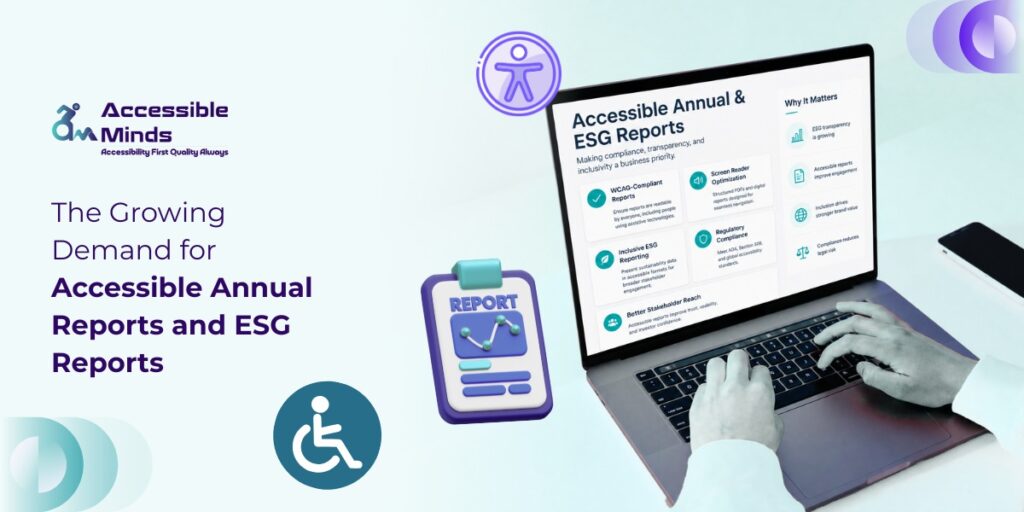
In recent years, organizations have significantly increased their focus on transparency, accountability, and stakeholder communication. Annual reports and ESG (Environmental, Social, and Governance) reports have evolved from compliance-driven documents into strategic communication tools that shape investor confidence, customer trust, and brand reputation. As businesses expand their commitment to inclusion and accessibility, another critical requirement has emerged: ensuring that these reports are accessible to everyone, including individuals with disabilities.
The demand for Document Accessibility Services is growing rapidly as organizations recognize that accessibility is no longer an optional enhancement. Investors, regulators, employees, and customers expect equal access to information regardless of their abilities. An inaccessible report can prevent users who rely on assistive technologies from understanding a company’s financial performance, sustainability initiatives, governance practices, and future plans. Consequently, businesses across sectors are prioritizing accessible reporting to meet legal obligations, strengthen stakeholder engagement, and reinforce their commitment to diversity, equity, and inclusion.
Why Accessibility Matters in Annual and ESG Reporting
Annual reports and ESG reports contain critical information that influences investment decisions, corporate partnerships, and public perception. These documents are often distributed in digital formats such as PDFs, interactive web pages, and downloadable reports. While visually appealing designs may impress readers, they can create significant barriers for people using screen readers, keyboard navigation, voice recognition software, or other assistive technologies.
When accessibility is overlooked, users may encounter issues such as missing document tags, improper reading order, inaccessible charts, unlabeled images, poor color contrast, and non-descriptive hyperlinks. These barriers make it difficult or impossible for individuals with disabilities to access information independently.
Organizations are increasingly recognizing that accessibility is directly linked to transparency. If stakeholders cannot access important disclosures, financial statements, or sustainability commitments, the effectiveness of the report is compromised. This realization has fueled demand forAccessible Document Services that ensure reports are usable by all audiences while maintaining professional design standards.
Beyond usability, accessibility reflects an organization’s values. Companies that invest in accessible reporting demonstrate a genuine commitment to inclusion rather than treating it as a checkbox exercise. This commitment resonates strongly with investors and consumers who prioritize ethical and socially responsible business practices.
Regulatory Expectations Are Driving Adoption
Governments and regulatory bodies worldwide are placing greater emphasis on digital accessibility. As accessibility legislation continues to evolve, organizations are under increasing pressure to ensure that public-facing documents comply with recognized standards such as WCAG (Web Content Accessibility Guidelines), PDF/UA, Section 508, EN 301 549, and the European Accessibility Act.
For publicly traded companies, financial institutions, government agencies, educational institutions, and multinational corporations, compliance requirements are becoming increasingly complex. ESG reporting, in particular, is receiving heightened scrutiny as regulators seek greater transparency around sustainability commitments and corporate governance practices.
Organizations that fail to provide accessible documents may face legal challenges, compliance risks, reputational damage, and reduced stakeholder trust. As a result, businesses are proactively investing in Document Remediation Services to identify and correct accessibility barriers before reports are published.
Accessibility is no longer viewed solely through a legal lens. Instead, it is becoming an essential component of corporate governance and responsible business operations. Companies are realizing that accessible reporting aligns naturally with the principles of ESG itself—especially the social and governance pillars, which emphasize inclusivity, accountability, and equitable access to information.
Key Benefits of Accessible Annual and ESG Reports
Organizations that prioritize accessibility gain advantages that extend far beyond compliance requirements. Accessible reporting creates a more inclusive experience while delivering measurable business value.
Some of the most significant benefits include:
- Expanded access to investors, shareholders, employees, and customers with disabilities.
- Improved compliance with global accessibility regulations and standards.
- Enhanced brand reputation and stronger commitment to diversity, equity, and inclusion initiatives.
- Better usability across devices, browsers, and assistive technologies.
- Increased stakeholder trust through transparent and equitable information sharing.
These benefits explain why accessibility is increasingly being integrated into corporate reporting strategies rather than being addressed as a last-minute requirement. Accessibility teams are now collaborating closely with investor relations departments, sustainability leaders, compliance teams, and marketing professionals to ensure reports are accessible from the earliest stages of development.
This proactive approach reduces remediation costs, improves publishing efficiency, and creates a better experience for all users. Organizations that embed accessibility into their reporting workflows often find that the quality and clarity of their content improve overall, benefiting every stakeholder regardless of ability.
The Future of Corporate Reporting Is Inclusive
As ESG reporting continues to expand and stakeholder expectations evolve, accessibility will play an increasingly important role in corporate communications. Investors are seeking greater transparency. Regulators are demanding stronger accountability. Consumers are evaluating organizations based on their social impact commitments. In this environment, accessible reporting is becoming a critical differentiator.
The future of annual and ESG reports extends beyond simply publishing information. Organizations must ensure that information is understandable, navigable, and available to everyone. This requires a combination of accessibility expertise, document remediation, inclusive design practices, and ongoing quality assurance.
Modern reporting often includes complex tables, data visualizations, interactive elements, and multimedia content. Ensuring accessibility for these components requires specialized knowledge and a thorough understanding of accessibility standards. This is why demand for professional Document Accessibility Services continues to rise across industries.
Forward-thinking organizations are increasingly incorporating accessibility reviews into their reporting cycles, treating accessibility as a strategic investment rather than a compliance obligation. By doing so, they not only reduce risk but also strengthen relationships with stakeholders who value inclusion and transparency.
As accessibility becomes a standard expectation across digital communications, companies that embrace inclusive reporting today will be better positioned to meet future regulatory requirements, support diverse audiences, and demonstrate authentic leadership in ESG and corporate responsibility initiatives.
Conclusion
The growing demand for accessible annual reports and ESG reports reflects a broader shift toward inclusive business practices and transparent communication. Accessibility is no longer an afterthought; it is a fundamental requirement for organizations that want to engage all stakeholders effectively. Through professional Document Accessibility Services, Accessible Document Services, and Document Remediation Services, businesses can ensure their reports meet compliance standards while delivering an equitable experience for every reader.
Organizations that invest in accessibility today are not simply improving documents—they are strengthening trust, enhancing corporate reputation, supporting ESG objectives, and building a future where information is truly accessible to everyone.