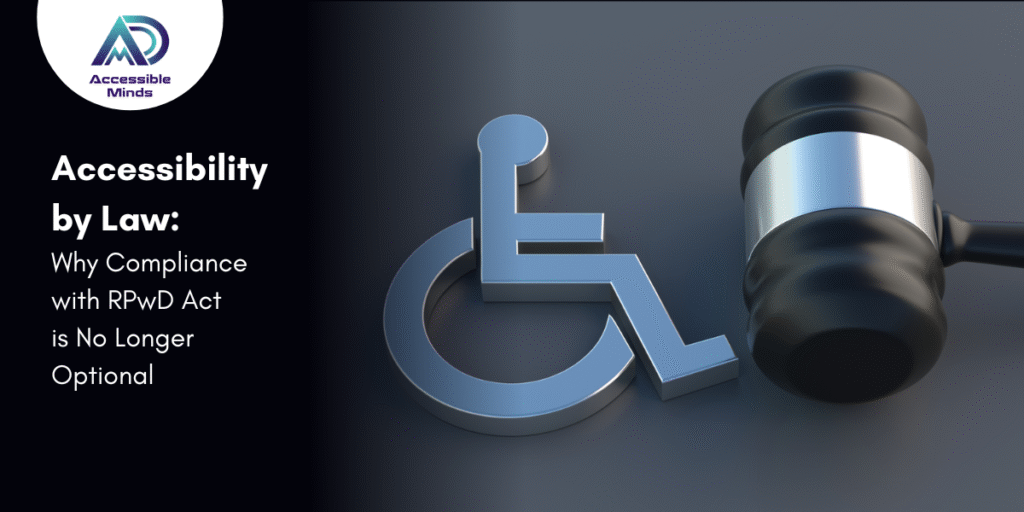
As digital ecosystems become central to how organizations deliver services, the need for inclusive and barrier-free online experiences has moved from a best practice to a legal mandate. In India, the Rights of Persons with Disabilities (RPwD) Act, 2016 has transformed accessibility into a statutory requirement, compelling public and private entities to ensure that their websites, applications, and digital documents are accessible to all users including people with disabilities. This shift has accelerated the demand for web accessibility remediation, as organizations must now identify, fix, and prevent accessibility barriers to remain compliant and avoid legal exposure.
The Legal Framework: What the RPwD Act Mandates
The RPwD Act strengthens the rights of individuals with disabilities by ensuring full and effective participation in society. Under Section 42 of the Act, the government mandates that all public and private entities delivering services must provide accessible information and communication technology (ICT). This includes:
- Websites and mobile applications
- Online documents, PDFs, forms, and multimedia
- Software platforms and digital user interfaces
- Public-facing digital services and portals
In 2017, the Ministry of Social Justice and Empowerment further clarified these requirements through Harmonized Guidelines that explicitly reference adherence to WCAG 2.0 Level AA standards for web accessibility. This means that the RPwD Act does not simply recommend accessibility; it mandates compliance with globally recognized standards.
Why Non-Compliance Is No Longer an Option
1. Legal Penalties and Enforceability
The RPwD Act includes provisions for penalties ranging from fines to imprisonment for repeated violations. Several legal notices have already been issued to government and private organizations for failing to provide accessible platforms. Courts in India increasingly view accessibility as a fundamental right, making non-compliance a legally indefensible position.
2. Rising Litigation and Public Awareness
As digital accessibility awareness grows, users with disabilities are more empowered to raise complaints, file petitions, and demand equal access. Accessibility lawsuits in India, though still emerging, are rapidly increasing. This shift mirrors global legal trends, where thousands of accessibility-related lawsuits are filed annually.
3. Public Sector Procurement Requirements
Government tenders and procurement guidelines now require compliance with accessibility norms. Organizations that fail to meet WCAG standards or cannot demonstrate accessibility testing and remediation lose competitive advantage in bidding for government projects.
4. The Business Imperative
Accessibility is not just a legal requirement, it is a business opportunity. Nearly 2.2% of India’s population lives with a disability as per official estimates, and the actual number is believed to be significantly higher. Accessible digital platforms improve usability for all users, enhance SEO, reduce bounce rates, and increase conversions.
Ignoring accessibility is no longer a viable path when customer expectations, legal obligations, and global digital practices all demand inclusivity.
The Role of Web Accessibility Remediation
Compliance with the RPwD Act requires more than surface-level fixes. Organizations must invest in web accessibility remediation, a comprehensive process that involves:
- Auditing and identifying barriers using automated tools and manual testing
- Mapping issues to WCAG 2.0/2.1 guidelines
- Implementing code-level fixes for compatibility with screen readers, keyboard navigation, and assistive technologies
- Ensuring captioning and transcripts for multimedia content
- Remediating documents such as PDFs, Word files, and presentations
- Conducting usability testing with people with disabilities
- Creating long-term accessibility governance frameworks
Remediation ensures that digital platforms are not only compliant at launch but remain accessible during updates, redesigns, and content changes.
Common Barriers Found During Remediation
Some of the frequently identified issues during web accessibility remediation include:
- Missing alt text for images
- Improper heading structure
- Low color contrast affecting readability
- Non-accessible PDF documents
- Keyboard traps blocking navigation
- Missing form labels and instructions
- Videos without captions or audio descriptions
- Dynamic content inaccessible to screen readers
These issues collectively create an exclusionary user experience. By addressing them systematically, organizations achieve compliance while offering equitable access to all users.
RPwD Compliance Is a Continuous Commitment
Compliance is not a one-time checklist exercise. The RPwD Act expects organizations to maintain accessibility as an ongoing practice. This means:
- Regular accessibility audits
- Training internal teams on accessible design and development
- Updating digital platforms in line with evolving WCAG guidelines
- Maintaining accessible procurement policies
- Incorporating accessibility from the design stage instead of as a post-launch fix
Organizations that adopt accessibility as a core value not just a legal requirement see better user satisfaction, improved retention, and stronger customer trust.
Conclusion: Accessibility Is a Legal, Ethical, and Digital Priority
The RPwD Act has firmly positioned accessibility as a legal obligation for all organizations operating in India. Non-compliance is no longer an option in a landscape where regulators, customers, and courts demand inclusive digital experiences. Investing in web accessibility remediation is the most effective way to meet these expectations, eliminate barriers, and future-proof digital platforms.
By aligning with the RPwD Act and global accessibility standards, organizations not only minimize legal risk but also demonstrate a commitment to inclusivity, equality, and user-centric digital design.